

Choosing between the Serengeti vs Masai Mara is the most critical decision when planning an East African wildlife adventure. Both iconic destinations offer unforgettable views of the Great Wildebeest Migration, but they provide distinctly different safari experiences. To plan an authentic, customized itinerary that places you right in the middle of the wildlife action, visit www.masaiafricasafaris.com for expert travel guidance.
The Core Difference: Scale, Geography and Atmosphere.
While the Serengeti National Park in Tanzania and the Masai Mara National Reserve in Kenya form one continuous, unfenced ecosystem, their physical layouts create two very different vacation styles. Understanding these structural differences helps you match your travel goals with the right destination.
1. The Endless Plains of the Serengeti.
The name Serengeti comes from the Maasai word Siringet, which translates to “the place where the land runs on forever.” Covering nearly ten times the area of its Kenyan neighbor, this massive park offers a deep sense of remote wilderness. You can drive for hours across flat, golden savannahs dotted with acacia trees and ancient granite outcroppings known as kopjes.
Because of its enormous geographical footprint, animal populations are spread out over vast distances. A safari here is a journey of exploration. You will enjoy expansive, horizon-to-horizon views and a feeling of solitude, with fewer vehicles sharing your viewing space in the remote corners of the park.
2. The Compact Action of the Masai Mara.
The Masai Mara is significantly smaller, but what it lacks in sheer landmass, it makes up for in extraordinary wildlife density. The landscape features rolling green hills, riverine woodlands, and open grasslands drained by the famous Mara and Talek rivers.
Due to its compact layout, game drives in the Masai Mara require less transit time between sightings. You are almost guaranteed quick, rewarding encounters with predators and grazing herds shortly after leaving your lodge. It is an action-packed destination ideal for travelers with shorter holiday windows.
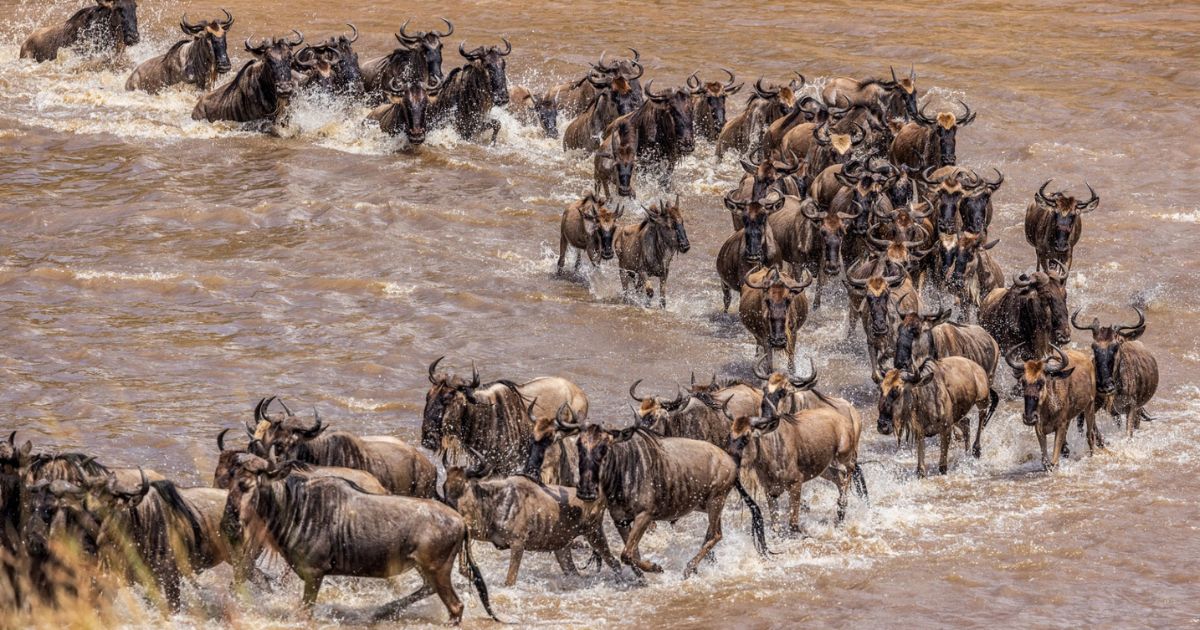
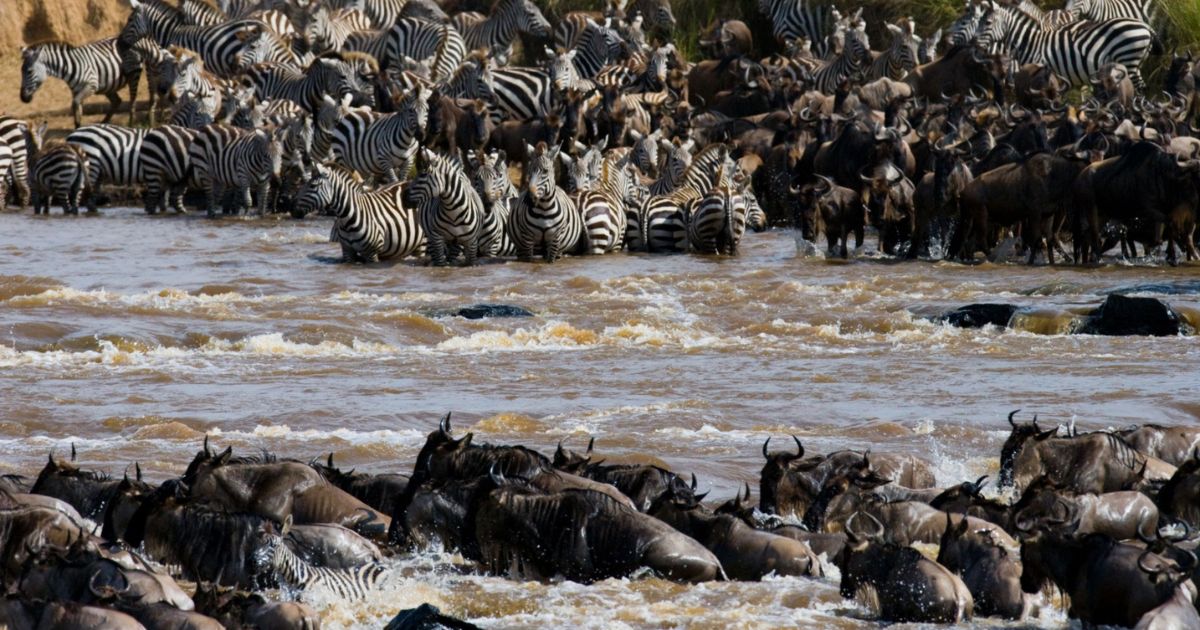
The Great Wildebeest Migration: Month-by-Month Calendar.
The Great Migration is not a single event that happens in one spot; it is a year-round, endless cycle driven by seasonal rainfall and the search for fresh grazing grass. To witness this natural wonder, you must match your travel dates with the exact location of the moving herds.
| Month / Season | Primary Location | Key Wildlife Highlights |
| Jan – March | Southern Serengeti | Calving season; thousands of babies born daily; high predator action. |
| April – May | Central Serengeti | Herds move north through wet, tall grasses; mating season begins. |
| June – July | Western Corridor | Grumeti River crossings; giant crocodiles ambush migrating herds. |
| July – October | Masai Mara | Peak Mara River crossings; highest density of wildlife in Kenya. |
| Nov – December | Eastern Serengeti | Short rains begin; herds travel south to restart the annual cycle. |
1. The Calving Season in Tanzania (January to March).
If you travel early in the year, the southern short-grass plains of the Serengeti are the place to be. Over two million wildebeests, zebras and gazelles gather here to give birth. Within a brief multi-week window, nearly half a million calves are born.
This sudden abundance of vulnerable young prey attracts high concentrations of apex predators. Lions, cheetahs, leopards and spotted hyenas patrol the plains, offering wildlife enthusiasts and photographers dramatic predator-prey interactions.
2. The Peak Crossing Season in Kenya (July to October).
By mid-July, the migrating columns reach the northern edge of the ecosystem and begin crossing into Kenya. This marks the peak season for a Wildebeest migration Kenya safari. For nearly four months, the Masai Mara becomes the primary stage for nature’s most intense drama.
The herds must repeatedly cross the rushing waters of the Mara River to access fresh pastures. These crossings are treacherous, as massive Nile crocodiles wait in the currents while lions ambush animals on the steep riverbanks. Witnessing a chaotic river crossing is the ultimate highlight of a Masai Mara safari.
Wildlife Viewing and Big Five Sightings.
Beyond the seasonal migration, both parks support healthy, year-round populations of resident wildlife. For travelers looking to book Big Five safaris Kenya or Tanzania packages, both destinations offer exciting wildlife encounters.
1. The Big Cat Capital of Africa.
If your primary goal is spotting big cats, the Masai Mara has a distinct advantage. The reserve boasts one of the highest lion densities in the world. Famous prides are easily sighted, and the open terrain makes it simple to track cheetahs hunting at top speed across the plains.
The Serengeti is equally rich in predators, but they are distributed across a much larger territory. Leopards are frequently spotted lounging in the branches of sausage trees along the Seronera River, while lion prides claim territory around the rocky kopjes that dot the landscape.
2. Tracking the Elusive Black Rhino.
Spotting all of the Big Five—lion, leopard, elephant, buffalo and rhinoceros—is a major milestone for safari travelers. Elephants and buffaloes thrive in massive numbers across both parks, moving in impressive family herds.
The endangered black rhino is the most difficult member of the Big Five to find. In Kenya, the protected Mara Triangle area offers dedicated anti-poaching patrols and daily monitoring, giving travelers excellent odds of a rhino sighting. In Tanzania, rhinos are present but harder to spot due to the vastness of the Moru Kopjes region.
The Safari Experience: National Reserves vs Private Conservancies.
How you experience the bush depends heavily on whether you stay inside the main national boundaries or within the surrounding private conservation areas.
1. The Advantage of Masai Mara Conservancies.
One of the greatest benefits of choosing Kenya is the network of private conservancies bordering the main reserve, such as Mara North, Olare Motorogi and Naboisho. These community-owned lands partner with Masai Mara tour operators to offer exclusive, low-density wildlife viewing.
Staying in a private conservancy unlocks activities that are strictly banned inside the main national reserve. You can participate in guided walking safaris with armed Maasai warriors, enjoy afternoon bush sundowners and embark on night game drives using spotlights to hunt for nocturnal creatures like aardvarks, bushbabies and hunting leopards.
2. Authentic Mobile Camps in the Serengeti.
In Tanzania, the ultimate luxury experience involves staying in seasonal mobile tented camps. These specialized camps pack up and move two or three times a year to follow the migration paths across the park.
Mobile camps offer a romantic, immersive bush atmosphere. You sleep under canvas with authentic bucket showers and gourmet dining, waking up to the sounds of thousands of wildebeests grazing just outside your tent. For travelers seeking raw wilderness without sacrificing comfort, mobile camps are unmatched.
Travel Logistics and Accessibility: Serengeti vs Masai Mara.
Planning your travel route requires careful timing, as flight connections and road conditions differ between the two countries. Partnering with experienced safari tour operators Nairobi ensures seamless transfers.
1. Getting to the Masai Mara.
The Masai Mara is highly accessible, making it favorite among travelers booking custom Kenya safari packages. Most international visitors arrive at Jomo Kenyatta International Airport (JKIA) in Nairobi.
From Nairobi, you have two convenient options:
-
By Air: Take a 45-minute scenic bush flight from Wilson Airport directly to local airstrips inside the Mara, such as Keekorok, Ol Kiombo or Musiara.
-
By Road: Enjoy a scenic drive down the Great Rift Valley escarpment. The drive takes around five to six hours, allowing you to see the Kenyan countryside and local agricultural towns along the way.
2. Getting to the Serengeti.
Reaching the Serengeti requires a slightly longer travel itinerary. International travelers typically land at Kilimanjaro International Airport (KIA) or Arusha Airport in northern Tanzania.
Because the driving distances between northern Tanzania’s parks are long, many visitors choose light aircraft flights directly into Seronera (Central Serengeti) or Kogatende (Northern Serengeti). Alternatively, you can book a multi-day driving circuit that stops at the iconic Ngorongoro Crater and Tarangire National Park before arriving on the Serengeti plains.
Photography and Family Safari Considerations: Serengeti vs Masai Mara.
Both destinations cater well to specialized travel groups, but slight differences in terrain and layout may sway your decision depending on your travel companions and hobbies.
1. Photography Conditions.
For wildlife photographers, light and background aesthetics are crucial. The Masai Mara’s rolling hills and riverine edges create dramatic morning and evening shadows, perfect for artistic golden-hour portraits of resting predators.
The Serengeti’s endless horizons and flat grasslands offer clean, uncluttered backgrounds. This allows for stunning wide-angle landscape shots and clear action photography during high-speed cheetah chases or hunting sequences without trees blocking the frame.
2. Family Holidays with Children.
If you are traveling with children or elderly family members, the Masai Mara is generally the easier option. Shorter driving distances between the airstrips, lodges and wildlife hotspots prevent children from getting restless in the safari vehicle.
Additionally, many luxury lodges in Kenya offer dedicated family suites, swimming pools and interactive children’s conservation programs where young travelers learn beadwork, animal track identification and basic bush survival skills from Maasai guides.
Why Choose Masai Africa Safaris for Your Adventure.
A successful African expedition relies on flawless logistics, reliable vehicles and deep local knowledge. When you book with www.masaiafricasafaris.com, you partner with a premier travel provider dedicated to delivering an extraordinary holiday.
Frequently Asked Questions (FAQs) about Serengeti vs Masai Mara Safari.
1. Which park is better for seeing the Great Migration river crossings?
The Masai Mara is the top destination for dramatic Mara River crossings between July and October. The northern sections of the Serengeti also offer excellent river crossing views during this same window before the herds move fully into Kenya.
2. Can I visit both the Masai Mara and Serengeti on the same trip?
Yes. Many travelers book cross-border itineraries that combine both destinations. You can fly between the parks via regional border hubs like Migori and Tarime or cross by road through the Isebania border post.
3. What is the best month to visit the Masai Mara for wildlife?
While the Mara offers fantastic year-round game viewing, the most popular window is from July to October. During these dry months, the migrating herds are present, vegetation is thin and predators are active around water sources.
4. When should I visit the Serengeti to see the calving season?
The best time to witness the wildebeest calving season is from late January through February in the southern Ndutu plains of the Serengeti ecosystem.
5. Is the Masai Mara more crowded than the Serengeti?
During the peak crossing months of July and August, popular river crossing points in the main Masai Mara reserve can attract many safari vehicles. To avoid crowds while enjoying excellent wildlife viewing, stay in the bordering private conservancies.
6. Are night game drives allowed in both destinations?
Night game drives are strictly prohibited inside the main national boundaries of both the Serengeti National Park and the Masai Mara National Reserve to protect wildlife. However, they are permitted and actively offered within the Masai Mara private conservancies.
7. How do park fees and structure differ between Kenya and Tanzania?
Kenya charges a standard daily conservation fee for entering the Masai Mara National Reserve. In Tanzania, visitors staying inside the Serengeti pay a standard national park entry fee plus an additional daily lodge concession fee, which generally makes Tanzania overnight permits slightly more expensive.
8. Which destination is better for first-time safari travelers?
The Masai Mara is frequently recommended for first-timers due to its ease of access from Nairobi, high concentration of animals in a smaller area and excellent balance of luxury lodging and cultural experiences.
9. What should I pack for a Great Migration safari?
Essential items include neutral-colored clothing (khaki, green, brown), a warm fleece or jacket for chilly morning drives, high-factor sunscreen, a wide-brimmed hat, quality binoculars and a camera with a good telephoto zoom lens.
10. How far in advance should I book my Great Migration tour?
Because lodges near the Mara River and mobile camps in the Serengeti have limited room capacity, you should book at least eight to twelve months in advance if you plan to travel during the peak July-to-October migration season.
Conclusion: Serengeti vs Masai Mara.
The debate of Serengeti vs Masai Mara does not have a single winner; both destinations offer world-class wildlife spectacles that will leave you breathless. If you want endless horizons, massive scale and the dramatic early-year calving season, the Serengeti is calling your name. If you crave intense predator density, thrilling river crossings, and exclusive off-road activities in private conservancies, the Masai Mara is the perfect choice. Better yet, combine both parks for the ultimate cross-border African expedition.
Do not leave your once-in-a-lifetime wildlife dream to chance. Reach out to the trusted specialists at www.masaiafricasafaris.com today to secure your preferred travel dates, customized 4×4 transport and luxury tented accommodations for an unforgettable Great Migration adventure.