

Packing for an African safari means balancing strict airline weight limits with unpredictable wilderness weather. Bring too much and you face steep penalties on regional flights; bring the wrong gear and you risk a vacation compromised by intense sunburn, biting insects or freezing dawn winds. Knowing exactly what to pack for a safari in Kenya is the key to a seamless, comfortable adventure.
From the golden savannas of the Masai Mara to the rugged tracks of Amboseli, your gear needs to be as adaptable as the landscapes. This complete checklist cuts through the confusion, offering a highly practical breakdown of essential clothing, optical gear and mandatory travel paperwork. For seamless trip planning and expert-guided safari itineraries, the team at www.masaiafricasafaris.com has you covered.
1. Navigating Luggage Restrictions for Kenya Flights.
Before laying out your items, it is crucial to understand the spatial constraints of your journey. If your travel itinerary involves flying from Nairobi’s Wilson Airport directly to remote bush airstrips, you will step aboard small aircraft like Cessna Caravans or Dash 8s.
These regional planes have rigid weight boundaries because of their limited size and safety profiles. Most local aviation companies enforce strict luggage restrictions Kenya flights travelers must follow, capping your total baggage at 15 kilograms (33 pounds) per person. This weight limit includes your personal hand luggage and camera bags.
Furthermore, you are required to use soft-sided duffel bags instead of traditional hard-shell suitcases. Hard cases cannot warp or bend to fit into the unusually shaped, tight cargo holds of light aircraft. If you arrive at the airport with a rigid suitcase, the airline crew may refuse to load it, forcing you to buy an expensive soft bag at the terminal or leave your belongings behind in storage.
Pro Tip: Select a durable, water-resistant canvas or nylon duffel bag that lacks a rigid wheeled frame. Because nearly all luxury safari lodges and tented camps across Kenya offer affordable, quick-turnaround laundry services, you only need to pack enough outfits for four to five days, regardless of how long your vacation lasts.
2. Deciding Your Wardrobe: What to Wear on a Safari in Kenya.
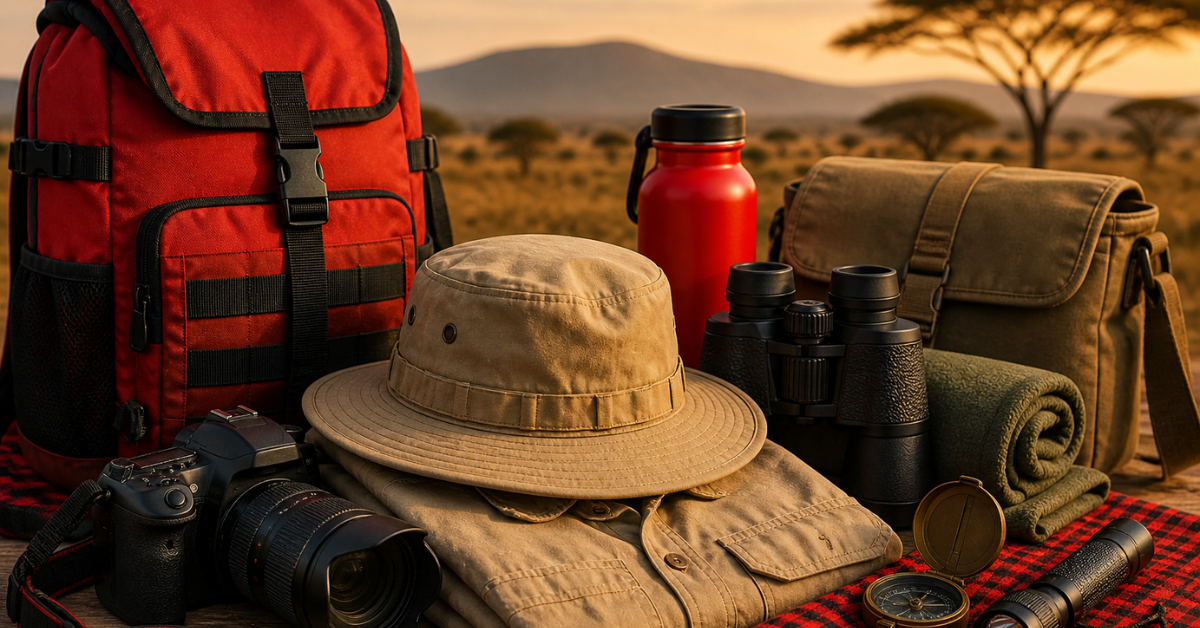
When finalizing your selection of safari clothes Kenya, your guiding principles should be utility, comfort, and protection from nature. You will spend hours sitting inside a 4×4 Land Cruiser or navigating bumpy dirt tracks, so your wardrobe choices must be highly practical.
The Power of Neutral, Earthy Colors.
You have likely noticed that professional guides and seasoned bush travelers always dress in shades of khaki, tan, olive green, brown, and muted grey. This is not for a fashion trend; it is a functional requirement of the wild. Muted tones help you blend into the dry savanna grasslands, which avoids startling the animals and allows for closer, higher-quality wildlife viewings.
Equally important is avoiding specific colors that cause unnecessary trouble in the bush:
-
Avoid Dark Blue and Solid Black: These specific shades are highly attractive to tsetse flies, which carry a painful bite and can transmit dangerous illnesses like sleeping sickness.
-
Avoid Bright White and Neon Tones: White stands out vividly against the natural landscape, making you easily visible to wildlife and causing animals to flee before your vehicle can get close.
-
Avoid Military Camouflage: In Kenya, camouflage patterns are legally reserved for the local military and police forces. Civilians wearing camo clothing can be stopped, questioned or fined by authorities.
The Art of Strategic Layering.
Based on seasonal weather patterns, temperatures can swing by more than 15 degrees Celsius within a single day. A typical morning game drive starts at 6:00 AM when the air is cold enough to require a jacket and scarf. By midday, the sun is intense, requiring short sleeves and sun protection.
Dressing in layers allows you to peel off outer garments as the temperature rises. Your base layer should be a light, moisture-wicking t-shirt. Over this, add a breathable, long-sleeved linen or cotton safari shirt to protect against the sun and insects. Finally, top it off with a warm fleece pullover or a windproof jacket.
3. The Comprehensive Safari Clothing Checklist.
To ensure your bag remains light while covering all weather conditions, use this targeted Masai Mara packing list clothing breakdown:
-
3–4 Lightweight T-shirts: Cotton or technical fabrics that dry quickly.
-
2–3 Long-Sleeved Safari Shirts: Essential for blocking UV rays and keeping mosquitoes away in the evening.
-
2 Pairs of Convertible Cargo Pants: Trousers that zip off into shorts are incredibly handy as the day warms up.
-
1–2 Pairs of Casual Shorts: Perfect for relaxing around the lodge pool during the midday heat.
-
1 Warm Fleece Jacket or Compact Down Jacket: Critical for cold morning game drives and evening campfires.
-
1 Lightweight Rain Windbreaker: A must-have item, especially if you are traveling during the green safari season.
-
5 Sets of Breathable Underwear: Lightweight fabrics that are easy to wash and dry quickly.
-
4 Pairs of Durable Socks: Thick cotton or merino wool socks to shield your ankles from insect bites.
-
1 Swimsuit: Most luxury safari camps feature beautiful outdoor pools overlooking the plains.
4. Selecting the Right Footwear for the Bush.
A frequent mistake made by first-time safari travelers is purchasing heavy, high-top mountaineering boots. Unless your travel itinerary specifically includes climbing Mount Kenya, massive boots are unnecessary and take up far too much weight in your duffel bag.
For standard game drives and guided bush walks, the best shoes for safari Kenya travelers can choose are lightweight trail runners, sturdy sneakers or low-profile walking shoes with excellent rubber grip. Closed-toe shoes are essential because they prevent sharp acacia thorns, loose dirt, and biting ants from bothering your feet when you step out of the vehicle for a bush breakfast or scenic overlook.
For your downtime inside the camp or lodge, pack a pair of light sandals or slip-on shoes. This gives your feet a chance to breathe after a long day in the field and makes walking around your tent easy.
5. Optical and Electronic African Safari Essentials.
To preserve the incredible sights of your journey and view animals from safe distances, carrying the proper gear is vital. Modern smartphones are excellent for landscapes, but they often fall short when capturing distant wildlife details.
High-Quality Binoculars.
If there is one item travelers regret forgetting more than any other, it is a personal pair of binoculars. While your professional driver-guide from Masai Africa Safaris will have a wealth of tracking experience and eagle-eyed vision, having your own optics gives you total visual independence. A specification of 8×42 or 10×42 is ideal for the bush, offering excellent magnification and light gathering without being too heavy to hold steady.
Cameras, Lenses, and Protection.
To get high-ranking wildlife photos, a DSLR or mirrorless camera paired with a telephoto zoom lens (at least 200mm to 300mm) is highly recommended. The Kenyan savanna can become incredibly dusty during dry seasons. Always pack a dedicated camera cleaning kit, micro-fiber lens cloths and a dust-proof dry bag to wrap around your camera equipment when driving through dusty terrain. Don’t forget to pack extra memory cards and spare batteries, as cold mornings can drain battery life faster than normal.
Power Adapters and Backups.
Kenya uses Type G electrical plugs (the British standard three-prong system). Bring a reliable universal travel adapter to keep your items running. Because many remote eco-lodges operate on solar systems or generators that turn off overnight, a high-capacity portable power bank (10,000mAh or higher) is a lifesaver for charging your phone and camera overnight.
6. Health, Medical and Personal Care Items.
Staying healthy throughout your trip ensures you can enjoy every moment of your adventure. Because safari destinations are located far from major towns, carrying a dedicated personal medical kit is essential.
Sun and Bug Protection.
The equatorial sun is incredibly strong, meaning sunburn can happen in minutes. Pack broad-spectrum sunscreen with an SPF of 30 or higher, a protective lip balm with UV filters and a wide-brimmed sun hat.
For insect defense, pack a premium repellent containing DEET or Picaridin. Applying it to your ankles and wrists during dawn and dusk hours is your best defense against bites.
Malaria Prevention and Medication.
Malaria is prevalent in several low-altitude wildlife regions across East Africa. Before departing, consult your doctor or a local travel clinic to obtain the correct Malaria prophylaxis Kenya safari regimen for your specific health history. In addition to your regular prescription medications, pack a compact first-aid kit containing:
-
Over-the-counter pain relievers (Ibuprofen or Paracetamol).
-
Anti-diarrheal medication (like Imodium) and oral rehydration packets.
-
Antihistamines for unexpected insect stings or plant allergies.
-
Motion sickness pills for navigating rough, unpaved savanna roads.
-
Antiseptic wipes, blister bandages and medical tape.
7. Mandatory Travel Documents and Paperwork.
Keeping your official paperwork neatly organized in a waterproof, easily accessible pouch inside your hand luggage prevents unexpected delays at border checkpoints.
| Document | Legal Requirement | Why It Matters |
| Valid Passport | Must have at least 6 months of validity remaining from your date of entry. | Required for entry into Kenya; must contain at least 2 blank pages. |
| Electronic Travel Authorization | Must be applied for and approved online prior to boarding your flight. | The Electronic Travel Authorization Kenya (eTA Kenya) system has replaced traditional tourist visas. |
| Yellow Fever Certificate | Mandatory if arriving from or transiting through a yellow fever endemic country. | Inspected strictly by health officials at airport immigration desks. |
| Travel Insurance Policy | Comprehensive coverage including emergency medical evacuation. | Ensures you are fully protected in case of medical issues in remote areas. |
8. Step-by-Step Guide on What to Pack for a Safari in Kenya
To maximize your limited 15kg weight allowance and keep your duffel bag highly organized, follow this simple step-by-step process:
9. What to Pack for a Safari in Kenya: Critical Items to Leave at Home.
Knowing what not to pack for a safari in Kenya is just as important as knowing what to bring. Leaving these items behind protects you from legal issues and lightens your load:
-
Single-Use Plastic Bags: Kenya enforces a strict nationwide ban on single-use plastic bags. Bringing standard plastic grocery bags, plastic duty-free bags or thin garbage bags into the country can result in heavy fines. Use reusable cloth or silicone pouches instead.
-
Recreational Drones: Flying a drone for leisure without extensive, pre-approved commercial permits from the Kenya Civil Aviation Authority is illegal. Unauthorized drones will be confiscated immediately at airport customs checkpoints.
-
Flashy Jewelry and Valuable Items: The lifestyle in the bush is wonderfully casual and rustic. Leaving expensive watches, necklaces and formal evening clothes at home reduces the risk of loss or theft and saves weight.
10. Frequently Asked Questions (FAQs) on What to Pack for a Safari in Kenya.
Q1: What is the single best color to wear while on a Kenyan safari?
Khaki and tan are the best colors. They reflect heat well, mask the omnipresent savanna dust perfectly and blend smoothly into the dry brush, keeping wildlife calm as your vehicle approaches.
Q2: Are Ziploc bags allowed into Kenya for packing toiletries?
Heavy-duty, reusable silicone ziplock bags used for packing toiletries are generally permitted. However, thin, single-use plastic grocery or sandwich bags are completely illegal and should be left behind.
Q3: Can I buy quality safari gear and clothing when I land in Nairobi?
While Nairobi features modern shopping malls with outdoor stores, options can be limited and prices are often higher for imported gear. It is much safer to purchase and break in your walking shoes and outfits before your arrival.
Q4: Should I pack a safari jacket even if traveling during hot summer months?
Yes, absolutely. Early morning game drives take place in open-sided 4×4 vehicles moving at speed before sunrise. The wind chill factor can make the air feel freezing, making a warm fleece or windproof jacket an absolute necessity.
Q5: What currency should I carry for tips and small purchases on safari?
The US Dollar (USD) is widely accepted across all Kenyan safari lodges and national parks. However, ensure your bills are clean, un-torn and printed after the year 2013, as older bills are routinely rejected by local banks. Carrying small denominations of Kenyan Shillings (KES) is also highly useful for tipping drivers, trackers and lodge porters.
Q6: Do I need to pack a formal outfit for dinners at luxury camps?
No, safari dinners are wonderfully relaxed and informal. Smart-casual attire, such as a clean long-sleeved shirt and trousers or a simple linen dress paired with a sweater, is perfectly appropriate for evening dining.
Q7: Is a wide-brimmed hat better than a standard baseball cap?
Yes. A wide-brimmed hat provides crucial UV protection for your ears, face and the back of your neck. A baseball cap leaves your ears and neck completely exposed to severe sunburn during long hours in an open-top vehicle.
Q8: Can I wear open sandals during a guided walking safari?
No, sandals are unsafe for walking safaris. Walking through the bush requires sturdy, closed-toe walking shoes or trail runners to protect your feet from sharp thorns, hidden rocks and biting insects.
Q9: What should I pack to protect my face from dust on game drives?
A lightweight cotton scarf, a multi-functional neck buff or a bandana is incredibly useful. When driving behind other vehicles on dry dirt tracks, pulling a buff over your nose and mouth keeps you from inhaling flying dust.
Q10: Where can I book a fully guided, tailor-made safari in Kenya?
You can plan and book an authentic, custom-designed itinerary led by experienced local guides by visiting the official team at www.masaiafricasafaris.com.
Conclusion: What to pack for a Safari in Kenya.
Carefully planning what to pack for a safari in Kenya ensures you stay comfortable, compliant and focused on the incredible wildlife around you. By choosing a soft-sided duffel bag, sticking to a neutral color palette, layering for temperature changes and securing your mandatory travel documents like the eTA, you will be fully prepared for an incredible experience.
The pristine wilderness and breathtaking landscapes of East Africa are waiting for you. Don’t leave your trip details to chance. Head over to Masai Africa Safaris today to speak with local experts, browse curated travel itineraries and know What to Pack for a Safari in Kenya.